
Fall Wedding Colors: Finding the Right Palette for Your Celebration

Fall wedding colors can be rich and dramatic, soft and understated, or somewhere in between.
September can still feel like summer, especially when the trees and golf course are green. By October, deeper reds, rusts and jewel tones often feel more at home with the season. Later in the fall, couples may want to lean into richer greens, plums, navy, chocolate, or metallic accents.
The best fall wedding colors are the ones that make sense not only on a mood board, but throughout the actual wedding day.
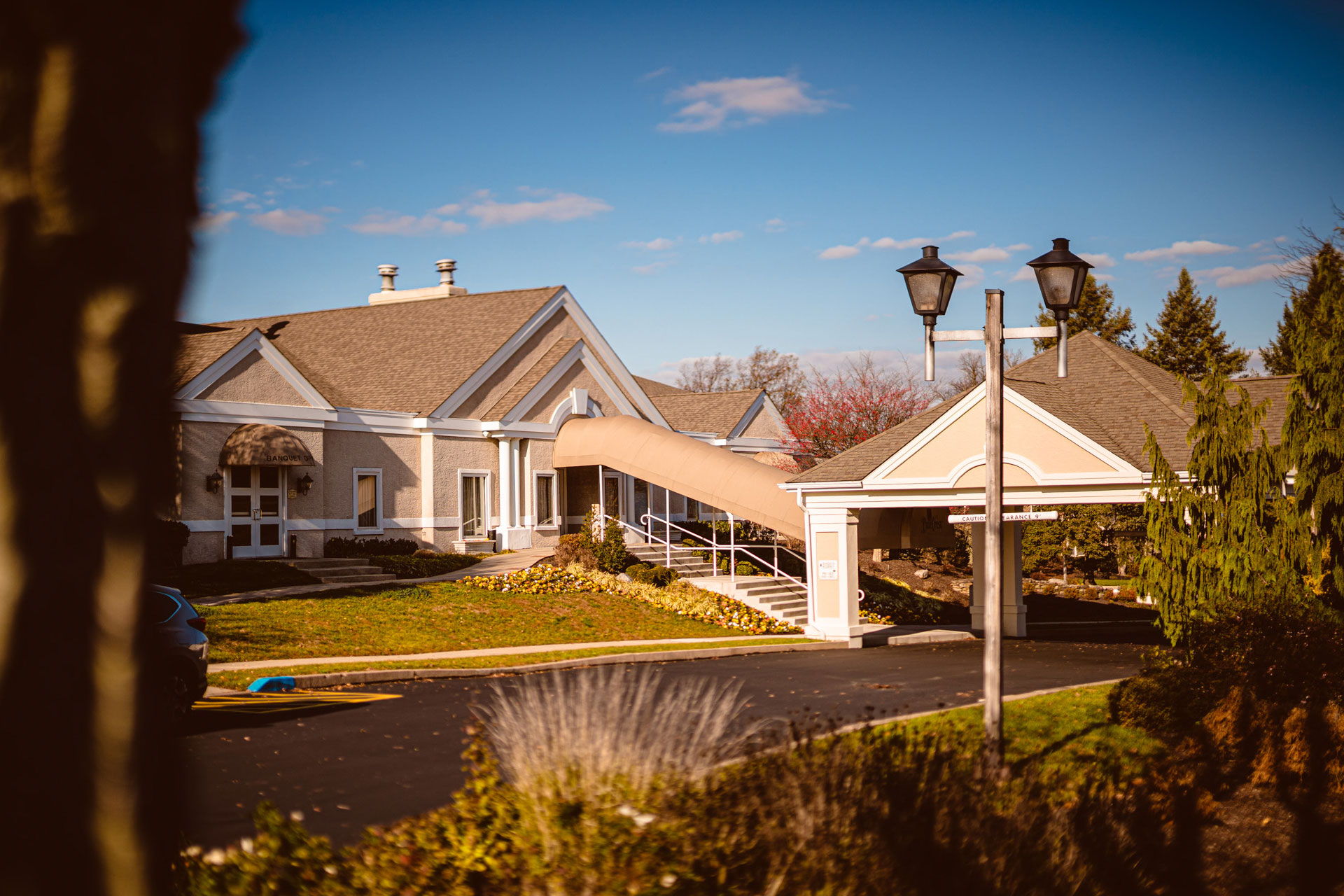
At PineCrest Country Club, that can mean thinking about how your colors will look during a ceremony with the golf course behind you, during cocktail hour on The Deck, and later under the Ballroom lights. You do not need the same color everywhere. A good palette connects those parts of the day without making every flower, napkin, and piece of attire match.
Start With the Setting, Not a Seasonal Color List
Before choosing exact shades, think about what will already be around you.
An outdoor ceremony in September may have a mostly green backdrop. In October, the surrounding landscape may bring more yellow, orange, and red into photographs. Inside, PineCrest’s Ballroom provides a more neutral backdrop, so couples have considerably more freedom with florals, linens and lighting.
That is one reason we recommend looking at color choices in person when you tour a wedding venue. A swatch that seems dark on a phone screen can look very different against natural greenery or inside a formal Ballroom.
It also helps to decide which color should do the most work.
Instead of choosing five equally important colors, start with a main shade and support it with one or two quieter choices. Burgundy with blush and champagne is one example. Forest green with ivory and gold is another. From there, different shades within the same family can appear naturally without making the wedding look overly coordinated.
Burgundy Without Making Everything Burgundy
Burgundy remains one of the most popular fall wedding colors, but it usually has more impact when it is not used everywhere.
A burgundy bridesmaid dress, wine-colored flowers, and a few darker accents can be enough. Ivory or champagne can take over on larger surfaces such as linens, while blush or greenery can keep bouquets from becoming too dark.
For a ceremony surrounded by green, burgundy stands out clearly in photographs. Once the celebration moves into the Ballroom, the same shade can appear more selectively in florals, napkins, candles, or stationery.
That gives you a recognizable autumn palette without turning the reception into a single-color theme.
Terracotta, Olive and Ivory for Early Fall
Terracotta has some of the warmth people associate with autumn without feeling as literal as bright orange. Pair it with olive or sage and ivory, and the overall look can suit a September wedding particularly well. The greens relate naturally to an outdoor setting, while terracotta begins to introduce the warmer colors of the season.
There is no need to carry all three shades into every detail. Terracotta might appear in bridesmaid dresses and florals. Greenery can do much of the work in centerpieces. Ivory can keep stationery and table settings clean.
This kind of palette is especially useful for couples whose wedding falls before peak foliage.
Navy Is an Easy Way to Make Fall Feel More Formal
Navy is worth considering if traditional autumn colors are not really your style. It pairs naturally with cream, champagne, copper, and greenery, and it moves easily from an outdoor ceremony into an evening reception. It is also practical when coordinating suits, dresses, and other wedding-party attire.
Rather than adding several more dark colors, let navy be the anchor. Cream flowers, warm metallic accents, and natural greenery can provide enough variation. The result still feels appropriate for fall without relying on leaves, pumpkins, or rust-colored décor to establish the season.
For a Richer October Palette, Look Beyond Orange
October opens the door to deeper colors, but those colors do not have to imitate the foliage outside.
Plum with mauve and antique gold gives you a rich autumn combination without using burgundy. Forest green with champagne and black has a sharper, more formal look. Cranberry paired with blush and gold can introduce seasonal color while keeping the overall design light enough for a wedding. Chocolate brown is another option that deserves more attention. Used with ivory and a muted accent such as dusty blue, it can feel sophisticated rather than rustic.
The common thread is restraint. One rich shade usually makes a stronger impression than several competing ones.
September Wedding Colors Can Still Be Light
September weddings deserve their own approach. Early in the month, the landscape around Montgomery County can still look decidedly green, and there is no reason to force an October palette onto a September wedding.
Consider combinations such as:
- Sage, terracotta, and cream
- Dusty blue, peach, and champagne
- Mauve, olive, and ivory
- Dusty rose, camel, and gold
- Navy, blush, and greenery
These palettes bridge late summer and early fall naturally.
If you are getting married later in September, you can deepen one of the shades without changing the entire concept. Sage can shift toward olive. Blush can move toward mauve. Peach can give way to terracotta.
That makes the palette feel connected to your actual date rather than simply labeled “fall.”
October Wedding Colors Can Be Deeper, But Contrast Matters
By October, burgundy, forest green, plum, rust, cranberry, navy, and chocolate all make sense. However, there is another consideration: your wedding photographs may already contain plenty of autumn color.
If the trees behind your ceremony are orange and gold, matching every floral arrangement to those same shades can cause the details to disappear into the background. Cream flowers, dark green, navy, plum, or burgundy can create stronger visual separation.
Your décor does not have to recreate the scenery. It can complement it.
Use Your Colors Differently During Your Wedding
A wedding palette becomes much easier to plan when you stop expecting every part of the day to look identical.
At the Ceremony
PineCrest offers outdoor ceremony settings including The Veranda and The Deck. These are ceremony locations, not outdoor reception venues. Because the golf course and surrounding landscape already provide a strong backdrop, ceremony décor does not need to be excessive. Flowers around an arbor or chuppah, aisle arrangements, and wedding-party attire may be enough to establish your colors.
PineCrest’s ceremony offerings can include a decorated arbor or chuppah, and floral accents. Those details give you several natural opportunities to introduce your palette without covering the ceremony setting in décor.
During Cocktail Hour
The Veranda and The Deck are also ideal for wedding cocktail hours, so this moment of your celebration already has a distinct setting. You do not have to recreate the Ballroom tables outside. Cocktail napkins, florals, signage, or a signature drink are enough to keep the palette present while guests mingle.
In the Ballroom
This is where couples can bring more of the palette into the overall design.
PineCrest’s Ballroom accommodates up to 270 guests for seated dining and dancing. Depending on the wedding package and selections, couples may also have options that include floor-length linens and napkins, fresh floral centerpieces, and in-house LED lighting. Those elements give you different ways to use color.
For example, a burgundy wedding does not require burgundy linens. Champagne linens, ivory florals, burgundy napkins, and warmer lighting may give the color more presence than simply repeating burgundy across every table.
The same principle applies to navy, plum, forest green, or terracotta. Use your strongest color where you want the eye to go.
Think About Florals and Attire Together
Florals and wedding-party attire are two of the largest blocks of color in many wedding photographs, so it helps to consider them at the same time.
If your bridesmaids are wearing burgundy, for example, bouquets made entirely from flowers in the same shade may lose definition against the dresses. Ivory, blush, or greenery can introduce contrast. The same goes for forest green, navy, or plum.
Your florist can help refine the exact flower varieties available for your wedding date, since seasonal availability may affect both color and cost. Bringing fabric swatches or photographs of attire to a floral consultation can also make it easier to see whether the colors actually complement one another.
Let the Smaller Details Support the Palette
Menus, escort cards, napkins, candles, and signage are useful places for secondary colors, but they do not all need to match. In many cases, repeating the same two or three shades in slightly different ways looks more natural.
If your main colors are navy, cream, and copper, for example, you might use navy in the wedding party, cream in the flowers, and copper primarily in stationery and table details. Guests will still read the design as one cohesive palette.
Your Wedding Colors Should Still Feel Like You
September weddings don’t have to focus on sage and October weddings don’t have to be dedicated to burgundy. If you love blue, use blue. If you prefer neutrals, build the wedding around cream, champagne, and greenery. If you want a dramatic Ballroom reception, plum, black, forest green, or navy can provide a stronger starting point.
Seasonality can come through in smaller ways, including flowers, foliage, candlelight, and metallic accents. We suggest bringing a few color ideas with you when you visit PineCrest. Look at them against the golf course. Picture them at the ceremony. Then consider how those same colors will carry into cocktail hour and the Ballroom. Seeing the colors in those different settings can be much more useful than looking at isolated swatches.
Planning a Fall Wedding at PineCrest Country Club
PineCrest Country Club in Lansdale gives couples a wedding day that can move from an outdoor ceremony to cocktail hour on The Deck and then into an upscale Ballroom reception.
Couples also have access to a private Bridal Suite, and PineCrest provides dedicated event support to help keep the celebration organized from preparation through the reception.
For couples holding their ceremony at PineCrest, available ceremony support can include a decorated arbor or chuppah, floral arrangements, chair setup and removal, a personal assistant, and rehearsal assistance. Those are practical details to consider along with the colors, flowers, and décor. A wedding palette matters most when it fits naturally into the way the entire day will unfold.
Schedule a tour of PineCrest Country Club to see the ceremony and reception settings in person to decide which fall wedding colors fit your celebration.